Abstract
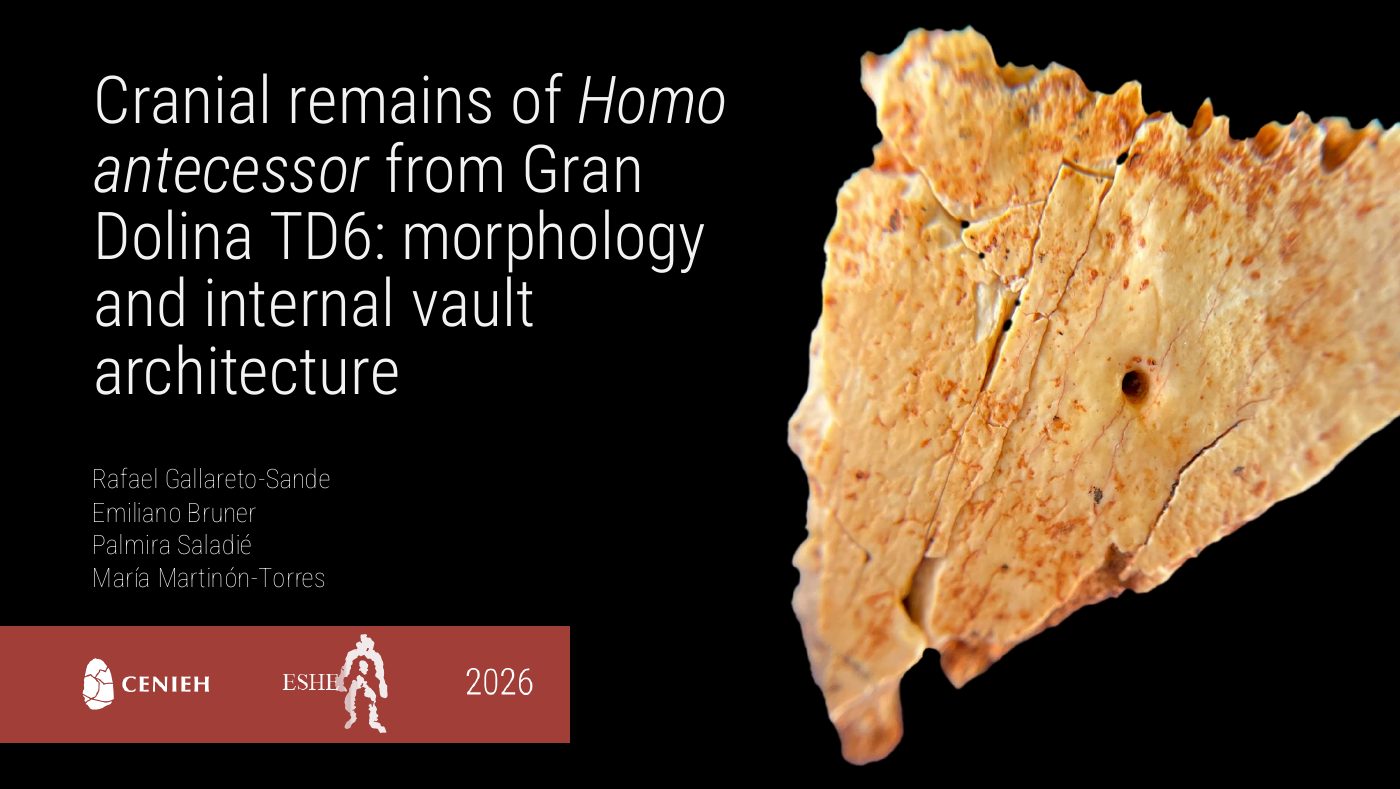
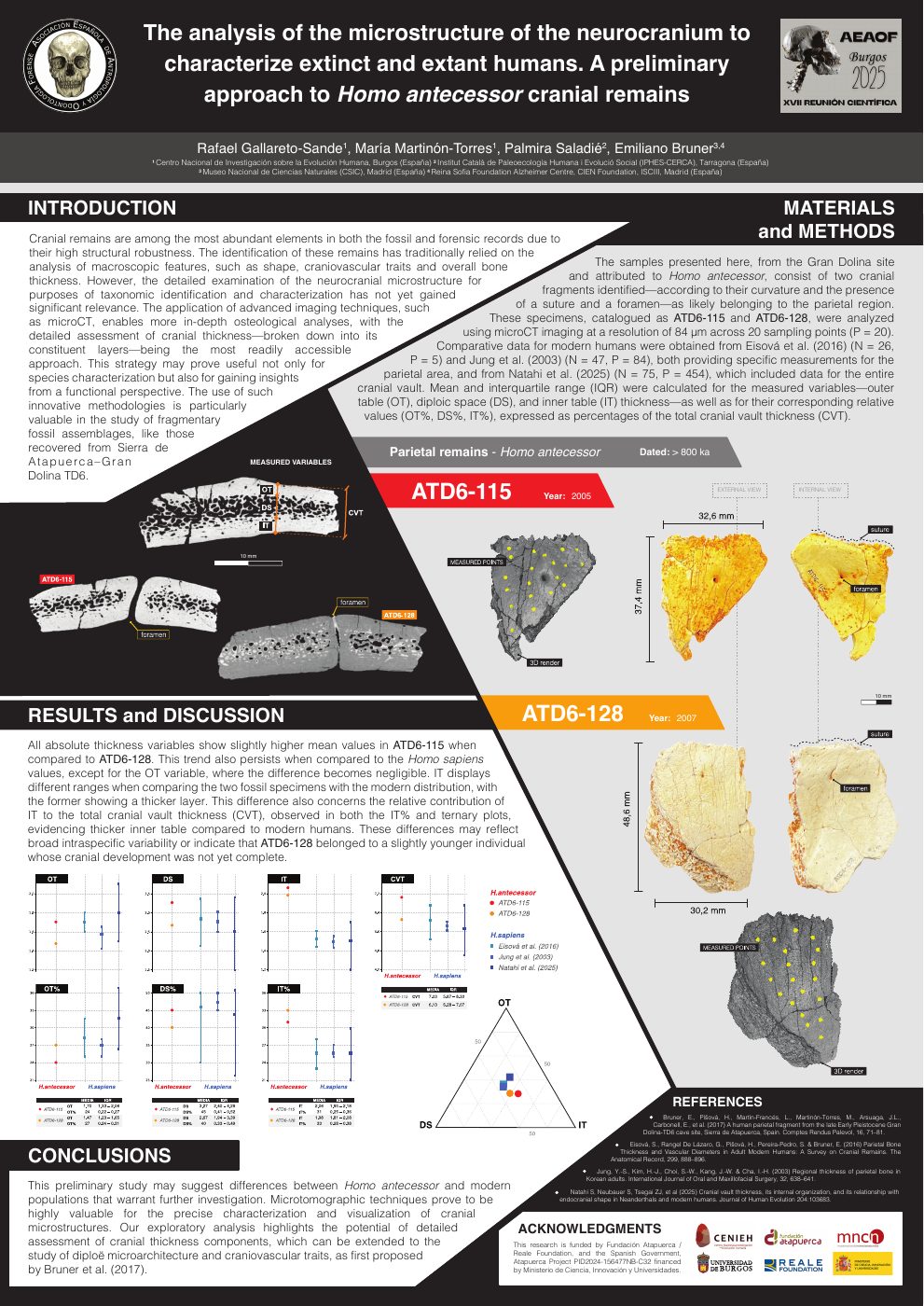
Homo antecessor, from the Early Pleistocene site of Gran Dolina (Atapuerca, Spain), occupies a basal phylogenetic position within the clade that includes Neanderthals and modern humans, yet its cranial morphology remains poorly characterized due to the fragmentary nature of the preserved remains. Here we describe three previously unstudied parietal fragments (ATD6-115, ATD6-128, ATD6-401) from the TD6 level, representing a minimum of two adult individuals, together with the juvenile specimen ATD6-100/168. Using micro-computed tomography, we quantified total cranial vault thickness (CVT) and the relative contributions of the external table, diploic space, and inner table at 20 standardized points per specimen. Mean total CVT in the adult fragments ranges from 6.07 mm to 7.03 mm, whereas the juvenile specimen is thinner (4.65 mm). In all specimens the diploic space constitutes the dominant layer (40–50% of CVT). Comparative analysis with published data places the adult H. antecessor parietal thickness within the range of H. neanderthalensis and modern humans, and below the robust condition of our comparative Early Pleistocene Homo sample. The spatial distribution of thickness follows a decreasing gradient from the posterior sagittal region inferiorly, an arrangement more consistent with the variable pattern reported for modern humans than with the more uniform distribution described for Neanderthals. These features reveal a mosaic morphology combining a derived, gracile vault with primitive traits, consistent with its proposed phylogenetic position.